- Sounding off: the hidden scandal of revisionist movie audio makeovers
- Travesty: all have missing or replaced dialogue, music and sound effects
- Defective: changes are often unintentional but seldom, if ever, corrected
- Many movies have had ersatz audio for far longer than creators’ originals
- If your fave has remade audio, it’s unlikely you’ve ever heard the real thing
- Buried: cinemas, streaming and TV broadcasts never have the original audio
- Fake-sounding, drastically altered and quietly foisted onto unsuspecting public
- Somehow question never even arises as to whether or not it should be done at all
- Even colorization haters approve despite same arguments applying for and against

Ain’t nothing like the real thing: since the 1960s, revisionist remixes of classic soundtracks have increasingly become the de facto versions
Contents
- What’s going on?
- Making mono music stereo
- Fill all your shiny speakers!
- Passing unopposed
- Conclusion
- Related articles
What’s going on?
Alfred Hitchcock’s innovative use of sound is universally acclaimed, yet despite making all of his films with mono soundtracks and some of the best techs in the business, most have been comprehensively altered years after his death and in many cases are the only versions available.
For most of TV broadcasting history and the early days of home video, studios gave little or no thought to offering films in their original, theatrically-released states, with various changes wrought on them to satisfy an ever-changing marketplace. Such alterations were, and still are, generally carried out by third parties years after their completion, such as censorship or editing for time constraints, usually to fit in more adverts. Another, “fullscreen” transfers of widescreen features for once-prevalent 4:3 aspect ratio tube TVs, was the norm for decades following the surging popularity of both in the 1950s and up until very recently, especially on pre-HD home video formats. Another revision, more costly and time-consuming, is 2D-to-3D conversion but it’s mostly been restricted to newer films and has more or less died a death already.
Less obvious to the uninitiated are visuals compromised by practices such as detail-destroying digital noise reduction and film grain removal, undesirable artifacts introduced by edge enhancement, and digital colour regrading. Thankfully the situation has steadily improved from the darkest days, especially since larger displays alongside DVD and the move to HD brought increased (but far from consistent) focus on authentic theatrical presentation. However, another past sin continues to haunt us and compromise even the most carefully restored classics with nary a word of objection, in fact quite the opposite. The last two main methods, colorization of black-and-white favourites and stereoization of mono soundtracks, came to prominence in the mid-1980s but have since taken wildly divergent paths with one becoming commonly unacceptable and the other unacceptably common.
Staying with colorization for a moment, any online discussion quickly devolves into rabid fans declaiming it a sheer blasphemy that disrespects the filmmakers for no good reason, by failing to honour their artistic intent. And that it will inevitably lead to the original black-and-white versions becoming unavailable and replaced completely. Yet even at the height of its popularity this never happened, not once: the originals have always been right there alongside revised versions, which are only ever considered secondary curios at best. But in the overwhelming majority of cases, altered soundtracks are the only or at least default options on physical home video releases, moving up to 100% of all cinema, broadcast and streaming versions. Yet almost everyone, even those in the anti-colorization brigade, remains strangely silent on the issue or is even in favour of it, though the exact same arguments apply for and against both practices. That’s (grim) irony for you.
Monophonic soundtracks were created by technicians of the golden age and beyond who really knew their craft, and were the predominant accompaniment to countless films from the late 1920s–1980s (and TV shows until the late 1990s). Literally billions of people have been thoroughly entertained by them for a century, with nary a word of complaint. Commercial stereoized music may have already proved a roundly disliked and dead-end concept but nonetheless, like the 20 to 30-year recurring cycle of 3D, history repeated itself. This happened when, with the early 1980s advent of stereo TV broadcasts and VHS players, studios were sold an opportunity for squeezing more money from their catalogues of classic content with mono audio.
- Audio Alchemy – Gail Buchalter
- Home Video Enhancements – Ken Joy
- Restoring a Rebel’s Faded Glory – Mary Marvin
- The Sound of Money: In Stereo! – Michael Arick
For example, all-time blockbuster The Ten Commandments had its first ersatz soundtrack remix released on home video as early as 1980 and it all really kicked into gear a few years later, when techniques had developed to the point where it became possible to quickly, cheaply but crudely remix and generally alter soundtracks wholesale. Suddenly, it was heavily touted by companies offering such services as a way for studios to “freshen up” their vintage film libraries for new audiences interested in filling all their new 2.0 stereo and Dolby Surround speakers in the nascent home theatre boom.
Leading the charge for overhauling old soundtracks was Rick Chace, founder of Chace Productions aka Chace Audio, who sadly died in 1992 at the age of 45. But his “pioneering” work and ethos has been continued by those who came in his wake, and today he’s hailed as a “hero of audio preservation and restoration.” However, promoting the alteration of original mono soundtracks to faux stereo while rendering the originals completely inaccessible violates the fundamental tenets of true restoration.
- Will the Real Stereo Please Stand Up? – Rick Chace
- The Great Surround Sound Debate – Ron Goldberg
- Making films Sound Better on TV – Warren Richards
Thus, Fox, MGM, Warner and others enlisted Chace, Audio Mechanics (despite disingenuous claims of honouring original intent) and their ilk to stereoize their mono soundtracks, regardless of genre or suitable source materials. This resulted in many hundreds of films being released with default, ersatz audio. Typical of them”is the Chace Audio botch of The Hurricane (1937) track, which distractingly confines the dialogue to the left channel and most of the sound effects to the right, with the music given left and right stereo spread. Those whose playback equipment has a mono/stereo switch may be able to counteract this stupidity.” (Sedgewick Clark, Variety International Film Guide 1997) Doing so would fold it down to listenable mono, albeit still remixed; even when an optional mono track was included, it was very often just such a fold-down of the remix and as with faux stereo music, they’re still reappearing regularly, mislabelled as originals.
The mid-late 1990s further saw the advent of home cinema and 5.1 audio on LaserDisc, swiftly followed by DVD, which afforded the ability to enjoy discrete surround sound in the home. This gave a massive boost to the already burgeoning modification market; if said soundtracks could be remixed, for a second or third time in some cases, to fill all of those shiny new speakers, it provided a renewed gimmick by which their films could be flogged all over again – naturally at a premium price. But even the earliest soundtracks in decent shape need no help from latter-day knob twiddlers, as anyone who’s experienced the piercing highs and rumbling, seat-shaking lows of, say, 1933’s still-unremixed King Kong via a decent sound system will testify.
However, it must be said that now many of those titles are being licensed and reissued by more discerning boutique labels like Criterion, Eureka and Arrow, the revisionist early 2.0 stereo remixes are seldom in evidence and only the original mono is included. Presumably it’s partly because the remixes’ actual quality is more easily heard on modern equipment to be far from what was so enthusiastically touted at the time they were made. And because including them is a pointless endeavour: the types of fans who are apt to seek out old films overwhelmingly want them as they were made; new aficionados cannot be magically created by simply slathering colour or surround audio all over an old film. No matter what you do, it’s still an old film, with all the good and (subjective) ‘bad’ that implies. At least the message seems to be penetrating that the early remixes at least aren’t up to snuff, yet some studios’ general appetite for full-blown surround revisionism continues unabated.
Therefore, the total number of vintage films with unnecessary, gimmicky soundtrack remixes is increasing all the time and now runs well into the hundreds, if not thousands; does anyone have a list? Even though we’ve now moved past 2K Blu-ray to 4K UHD discs and streaming, many films continue to be released with soundtracks their creators did not intend and never envisaged, with mono usually absented in favour of 5.1 surround and beyond. Featurettes trumpeting restorations are almost de rigueur on extras-stacked home video releases but their scant discussion of any soundtracks remixed in the process is invariably restricted to mealy-mouthed, self-serving platitudes. As Jeff says in Jurassic Park: “…your scientists were so preoccupied with whether or not they could that they didn’t stop to think if they should.”
Original Mono Soundtracks Missing on Blu-ray
Making mono music stereo
From the early 1950s onwards, as part of cinema’s fight back against TV’s burgeoning popularity, stereo sound became commonplace for widescreen epics. Later in the decade, commercial stereo music recordings and home hi-fi systems also became available for those that could afford them. Record labels, keen to exploit anew their vast back catalogues of mono recordings, soon hit on the idea of selling them as “stereo” by altering them sufficiently to slap the label on them – at a premium price, of course. This involved “stereo-izing” or forcing fake stereo from mono, using rudimentary re-equalising techniques that, while filling both speakers, utterly compromises the fidelity and aural intent of the original mono recordings.
Thus, from the turn of the 1960s “electronically enhanced” stereo records began to appear from various labels using similar patented processes. Among others, Capitol Records emblazoned such releases “Duophonic”, Columbia’s were “Electronically Rechanneled for Stereo” and RCA Records’ “electronically reprocessed stereo”. Though the practise quickly and deservedly fell from public favour within a decade, most labels have continued surreptitiously releasing their Frankensteinian masters into the CD and streaming era, so caveat emptor.
Stereoizing basically involves doubling the single mono track into left and right channels, boosting the bass on one and the treble on the other, delaying one by a few milliseconds causing a slight echo, adding overall reverb – et voilà. The resulting quasi-stereo effect is something that, as my north Nottinghamshire-born grandma in her early 1900s, rural-inflected dialect would say, is “Neither nowt nor t’other.” Of course, in cases where the original multitracks exist, perfectly decent-sounding, discrete stereo remixes can be achieved, as happened with The Beatles’ catalogue (though their film début is missing its original audio). And of course, the original creators’ mono mixes are always available, as carefully remastered as possible. But cases like the biggest-selling band in the world, with their meticulously archived masters, are the obvious exception.
For the most part, remixes are done directly from a single mono source, as the original discrete tracks no longer survive or, due to the basic recording methods used, never existed at all. Such is also usually the case with classic film soundtrack remixes. It’s perhaps worth mentioning that, thanks to the latest digital technology and as with recent professional colorization, direct mono-to-stereo music processes are now appreciably improved and referred to as Digitally Extracted Stereo (DES). Elvis’s earliest, now public domain recordings are by far the most popular subject. But make no mistake: even these modern revised versions mainly appeal to a niche market of enthusiasts eager for a curious alternative; for the overwhelming majority there’s nothing like the real (mono) thing.
Fill all your shiny speakers!
Mono to Dolby Atmos, DTS:X for AVR, Dolby Atmos vs DTS:X
As previously stated, early attempts at remixing mono soundtracks were mostly restricted to 2.0 stereo but over the years progressively extended to 5.1, 6.1 and 7.1 surround (stand up, classic Disney cartoons!). But now the Auro-3D (since 2012), Dolby Atmos (2011) and DTS:X (2015) surround formats offer potentially dozens of channels with extra horizontal, height and overhead speakers. There are no natively-mono films altered to Auro, and the only ones I know of remixed into DTS:X are Universal’s Vertigo (1958) and Psycho (1960), though it will reportedly also feature on Warner Bros.’ upcoming (Insta, Twit) 4K release of Gone with the Wind.
The oldest mono films to be remixed into more popular Dolby Atmos are The Bridge on the River Kwai (1957), whose original audio has rarely been attached since its earliest VHS and LaserDisc releases; Anatomy of a Murder (1959); Dr. No (1962) and To Sir, with Love (1967). These have been followed by numerous genre classics such as Easy Rider (1969), Willy Wonka (1971) and Enter the Dragon (1973); but mostly horrors like Daughters of Darkness (1971), The Texas Chain Saw Massacre (1974) and Jaws (1975). Overkill in more ways than one.
For film soundtracks, going from mono to 2.0 stereo and beyond isn’t nearly as straightforward as the primitive music stereoization described above; instead it requires additionally removing and replacing various elements of the original audio altogether. In brief, sections of the soundtrack to be altered are effectively lowered in volume as now-unwanted elements, such as mono music or original effects, cannot be removed completely, only minimised. Then, new stereo music recordings and effects are loudly overlaid to obscure the originals, although again, never completely successfully, as is the case with Vertigo’s egregious default remixes, later toned down after countless complaints. The resultant soup is then panned into different speakers to fill a modern soundstage.
Essentially, the more discrete stems you have to work with, the greater the potential for results that are both effective and most closely resemble the original. But when it comes to three stems or fewer – usually dialogue, music, and effects – and especially if mono only, you literally cannot unscramble an egg. Though the studio money grabbers, their shills and rampant egos don’t let it keep them from trying. But with very little effort, every pre-1990s, pre-digital surround format fits easily into the standard 5.1 speaker configuration and needs no significant alteration whatsoever; certainly much less work than totally remixing it requires. Of course, post-1990s we’re into the digital era era with multiple preserved stems eminently suitable for remixing, and with most of the original personnel still around to carry out the work themselves or at least offer advice and approve any new versions.
But even with all the time, money and raw materials in the world, an inescapable fact is that mistakes are always made. I’m not referring to deliberate, invariably poor judgement calls but inadvertent errors. These usually include unsynchronised, missing, misplaced and repeated audio, distracting phase and balance issues, etc. In the overwhelming majority of cases out in the wild, the original audio isn’t known well enough – or even available – for detailed comparison, but when it’s a film classic beloved by many, mistakes are always, always found. Sometimes they number in their dozens per film; all those mentioned on this site have literally millions of others’ words expounded online, bemoaning the state of their current primary soundtracks.
Just look at Jaws, which won Academy Awards for Best Film Editing, Best Original Dramatic Score and Best Sound. But the latter two are no longer widely heard as intended, as its 1975 theatrical mono audio has been altered to widely condemned 2.0 stereo surround (VHS, 2000) and 5.1 (2000, DVD), a tampered down 7.1 (2012, BD) and finally for now, Dolby Atmos (2020, UHD-BD). Said mono appears on all pre-DVD formats, though the US 1991 VHS and 1992 LaserDisc have a “Some [source] music rescored” disclaimer due to rights issues. For DVD, unaltered mono is only an option on the US 30th Anniversary standard, Limited Edition and Full Screen 2-disc sets; and, re-EQed, it’s also on all BDs and UHD-BDs.
Even in the case of a more recent, major studio blockbuster such as this with a comprehensive inventory of preserved original stems, there are numerous jarring additions and errors of omission. That’s despite one of the 2012 revisionists claiming, “It’s an iconic film; we’re very sensitive to the integrity of the original mix.” Mmm, ok. In terms of the assiduous archiving of its original sound elements, Jaws is analogous to The Beatles’ catalogue, so what chance does a more obscure, less well-archived and studied film stand? Incidentally, I don’t see the point of stopping at its sound design: despite Spielberg’s best efforts to only show it sparingly, there are several occasions when the mechanical shark looks decidedly fake, so why not spruce “Bruce” up with some judicious CGI? Sarcasm.
In more extreme but still commonplace examples where all but dialogue has been stripped away and replaced, and even sections of that can be missing, we’re deeply into Ship of Theseus territory or, for those who prefer more recent analogies, a Trigger’s brush scenario. Again, none of this work has ever been asked for by the intended recipients/audiences – quite the opposite – and does little or nothing to make a film seem “fresh” or “new”. Again, if they’re so confident about their remixes, why so consistently suppress the originals, if not to avoid undue comparisons being drawn by those who actually take the time to listen?
Basically, discrete surround remixes are fine for films that always had something as close as the filmmakers could get at the time, and with multiple extant, discrete stems to expand upon, so widescreen epics from the late-1970s’ Dolby Stereo era onwards. Epics such as 1977’s Star Wars and Close Encounters of the Third Kind were intended for surround viewing and retooled with their creators involved (as were George Martin and the surviving Beatles). But be very wary of remixes on anything dating prior to that. Note that prior to the late 1970s, all films that originally had multi-channel soundtracks for their premier engagements also had separately-mixed mono soundtracks for the majority of theatres which were not yet converted to stereo, making the latter heard by most audiences. Needless to say, as interesting as they’d be to hear and compare, those too are almost always locked away forever (except in cases where the primary stereo tracks are lost and there’s no remix) when there’s no reason they couldn’t be included as alternate tracks.
1979’s Max Max is a low budget actioner, nonetheless blessed with a dynamic and highly effective theatrical mono soundtrack. The Australian actors’ original dialogue was partially rewritten and overdubbed on American release for supposed increased clarity, also in mono; this has been the international de facto version ever since. But though the Australian has also been issued to a lesser degree, both have mainly been heard via several flawed 5.1 remixes and various permutations including mono and 2.0 stereo fold-downs. Only a few discs carry the original and unaltered Australian audio:
Passing unopposed
If fake “stereo” had already been tried before in the 1950s and ’60s, when many record labels unleashed wave after wave of mangled, originally-mono reissues which are now universally derided, how could it happen all over again? Why aren’t original soundtracks not also treated with the same reverence reserved for the visuals, and why don’t modern-day remixes receive at least a healthy amount of scepticism instead of being considered as good as, or even better than, the ‘real thing’? While articles, essays, featurettes and documentaries detailing the image restoration process are commonplace on releases of classic films, similar explanations of the actual mono-to-stereo remixing process are unsurprisingly rare. Those responsible are consistently opaque about what’s involved, instead relying on general disinterest and ignorance to foist their wares onto the viewing public. The dedicated featurette above for Psycho is a rare exception; if you can see past the unquestioning entitlement and arrogance of those involved, as happened with Vertigo everything they’re describing is utterly outrageous – but their resulting aberration is what both films are now saddled with virtually everywhere.
Likewise with the large number of screenshot sites comparing countless different releases: While they provide an essential service, I know of only one focused on the quality of audio tracks; the invaluable Blah-ray Blogspot. It makes a point of calling out the same spurious practices and more, including ubiquitous hiss reduction, which is also widely accepted while the image alterations described above are rightly reviled. But why the near-wholesale disconnect? Is the average film fan, or reviewer, less discerning and more gullible than the average music fan? Perhaps not. Think about it: with colorization, the results can easily be seen and assessed, and even with the better, more recent digital examples, everyone is still aware that they’re not original so can imagine what they would and should look like in black and white. But audio is much harder to quantify; as long as you can hear the dialogue and other elements adequately, there’s no ready point of reference or comparison, so altered versions pass by most people unnoticed.
Many people, including so-called professional reviewers, are seemingly under the mistaken impression all that’s needed is to push a magic button marked “Stereo Conversion” in a digital editing suite and mono soundtracks are instantly, somehow magically, transformed into stereo of whatever flavour is desired: 2.0, 5.1, Atmos, etc. They betray their ignorance by using simplistic terms such as the audio being “upmixed” or “given a surround bump” and nicely “spread” or “opened” out to all speakers to deliver a more “immersive” or “effectively enveloping” experience, completely eliding the fact its been comprehensively reworked and replaced. To make matters worse, most reviewers are sorely lacking in any technical knowledge and can’t even tell the difference between mono and 2.0 stereo. Instead, they just describe everything as “Dolby/DTS/etc 2.0”, rendering the whole area completely opaque and the audio portions of their reviews useless. Philistines. You know who you are.
Even when original mono is present on the disc, as a secondary option, reviewers talk of it only being there to “satisfy the purists.” I really take issue with the word “purist” being used in such a faintly sneering, pejorative manner. So, if one prefers the version of a film – or any other work of art, for that matter – as originally intended by its creators, uncut, uncropped, uncolorized, or otherwise altered by a third party many years after the fact, that somehow denotes a purist? Please.
Theoretically, I could get onboard with the idea of remixing mono to stereo where original stems exist and either the director or an original senior sound technician, or both, are involved. Further, that they’d state unequivocally stereo was originally desired but couldn’t be achieved due to cost or practical considerations. But, possibly because of the lack of suitable elements and passage of time, I can’t think of a single instance where this has occurred. And it’s almost certainly not going to happen now, so simply leave well enough alone. It’s a peculiar kind of arrogance that compels someone, especially a non-creative layman or technician, to believe they can improve on an actual artist’s work. One could equally argue that had “more realistic” CGI techniques been available to him, Ray Harryhausen would have used it to create his fabulous stop-motion animation creatures but is that reason enough to digitally replace all of them now? And then compound the crime by making his originals completely inaccessible? Just imagine the outcry…
Conclusion
↑The right way to do it, Mr Chace et al; pay close attention:
I can’t state this often enough: what we have here is the very definition of a solution in search of a problem. Fake “stereo” remixing is totally unnecessary when all that’s needed is to simply divert the mono signal into as many speakers as required. Et voilà: instant non-discrete but sonically pure audio that, contrary to popular belief, is also historically authentic as from the early talkie era onwards, cinemas would often daisy-chain mono speakers along the side and even rear walls for a more immersive effect. This helped ensure everyone was near a speaker, so those sitting near the screen weren’t blasted by the sometimes shrill sound early models emitted when over-driven, while those at the back strained to hear at all.
Many home theatre enthusiasts think mono soundtracks are meant to be listened to via single, or at most dual, front speakers. But it always comes with a strong whiff of believing the older audio format should be deliberately subjugated in favour of the subjectively more enveloping experience afforded when switching to a true stereo surround source. This is much like the rapidly depleting advocacy of 2.35:1 aspect ratio, constant image height home projection screens, asserting narrower aspect ratio films should be deliberately minimised to make scope pictures seem more impressive. In both cases, it’s a fallacious, self-defeating argument wholly ignoring the physical realities of actual viewing equipment and conditions.
I adore discrete surround audio and enjoy it almost daily in my own home; it’s absolutely fine for films that were designed and made with it in mind, especially modern action extravaganzas. But forcing it onto older works, some of whose creators had no idea it would ever even exist is anachronistic – and disrespectful – in the extreme. It’s also patronising to modern audiences, who are deemed incapable of appreciating the same carefully-crafted soundtracks their forebears enjoyed. A full restoration of original mono tracks is always the preferred choice but even a straight transfer of the cleanest available source, without over-zealous hiss and detail reduction (I’m looking at you, Criterion), is more than sufficient. Than add it as an option in a preferably lossless codec but even lossy DTS or Dolby Digital would suffice. And that’s it: the quickest and cheapest method, also absolutely guaranteed to please everyone and draw no ire whatsoever.
We’ve had stereo soundtrack revisionism for six decades now and most accept it as a fact of life but consider this: it’s the answer to a question that’s never been asked, except by unscrupulous studios or latter-day film owners and the remixers themselves, whose only agenda is to maximise exploitation and profits. Certainly, any perceived demand is never consumer-driven, or at best after the fact. Consider too the majority of original mono classics which have still, thankfully, never been remixed to stereo such as Casablanca, Citizen Kane, It’s a Wonderful Life, et al. Not one of them has had its critical or commercial standing harmed one iota for not being in surround sound. Conversely, Vertigo is widely recognised as one of the greatest films ever made, despite its widely criticised, badly remixed soundtrack. So why bother arbitrarily messing with the rest of them?
Lastly, here’s a revolutionary concept for the revisionists: putting a new coat of paint on an old film does not somehow automatically make it comparable to a new work in any sense, any more than having a facelift or botox makes an old person young again. Rather, consider everything that makes a classic film what it is: the editing, aspect ratio, granular appearance, colour (or lack of it), sound format, acting styles, costumes, architecture and interiors, mise-en-scène, etc. These represent the very essence of its nature and the era in which it was created, and are not ‘problems’ to be fixed nor mere starting points to be endlessly ‘improved’ upon. Leave well enough alone, and if you can’t do that, don’t suppress the originals to avoid adverse comparison with your inferior revised versions.
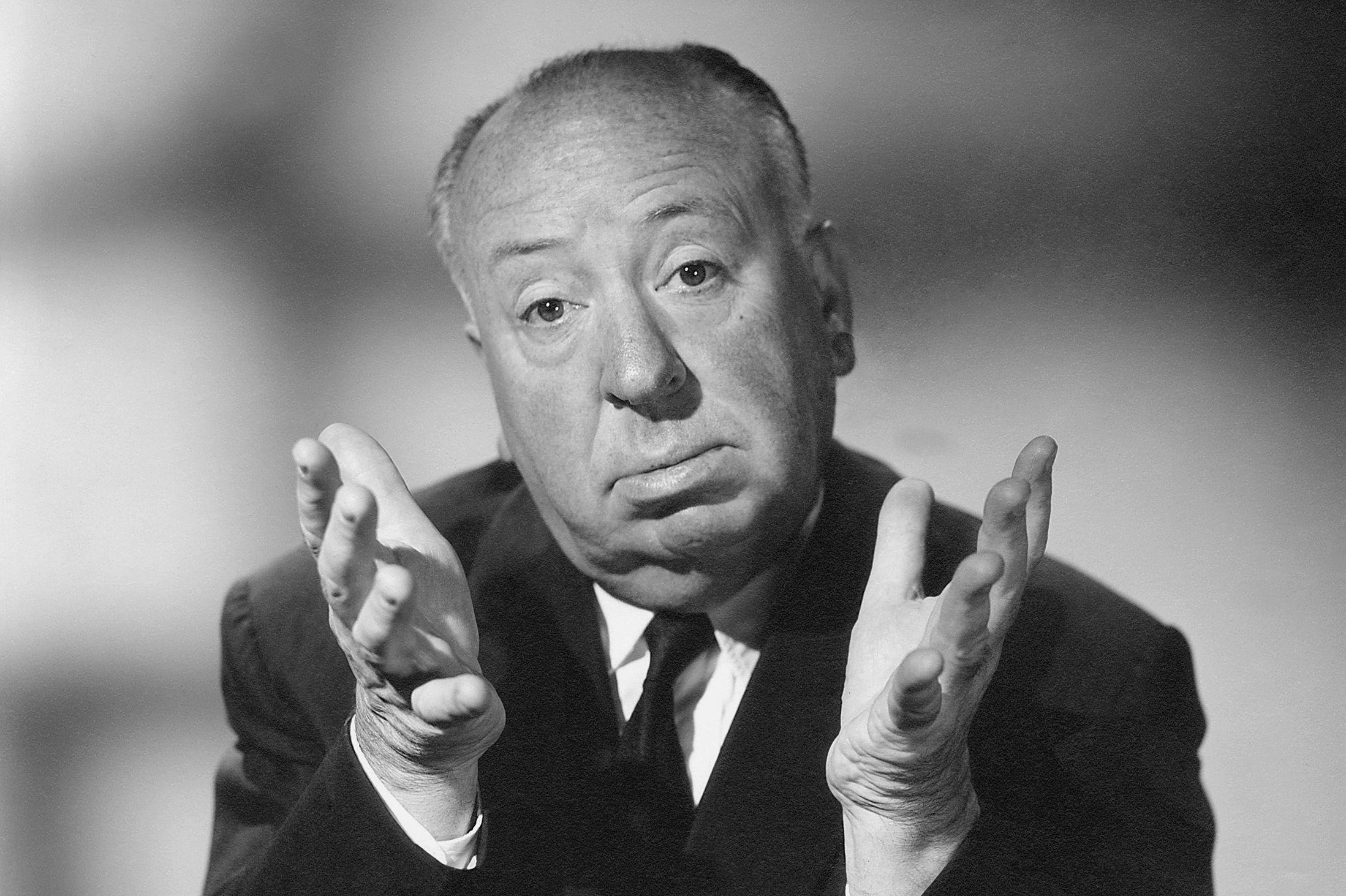
Ersatz the way I don’t like it: Sir Alfred would doubtless be unamused at the wanton destruction of his carefully constructed soundtracks
Related articles