Soundtrack and audio mixes
- Composer Lyn Murray’s lush music available in several partial re-recordings
- But only one rare, limited edition release contains his entire original score
- Owners Paramount have judged the two original sound designs obsolete
- Only their revisionist stereo surround remixes are now widely available
- Disrespectful studio routinely alters old films and calls it “restoration”
Note: this is part of an ongoing series of 150-odd Hitchcock articles; any dead links are to those not yet published. Subscribe to the email list to be notified when new ones appear.
To Catch a Thief: Writing on a Classic | Making of a Masterpiece | Collectors Guide, Pt 2: Soundtrack and audio mixes, 3: Home video, 4: 2020s revisions

(source)
Contents
Soundtrack
Sadly, those enticing window posters aren’t real… but at least a few collections include To Catch a Thief’s original Main Title cue among their copious aural delights.
- él/Cherry Red CD Music from the Films of AH (2010)
- Milan 2-CD/MP3 Alfred Hitchcock and His Music/alt (2013)
- Disques Cinémusique MP3 Best Grace Kelly Movie Themes (2019)
- Cinezik 2-LP Best Scores from Alfred Hitchcock’s Films/alt (2020)
Lyn Murray, a British-born, US-based composer-conductor-arranger, performed all three duties on the recording sessions for his lush, jazzy score on the last of his six films for Paramount. Although he had many other achievements in a long and distinguished career in radio, theatre, film and television, To Catch a Thief is his most notable work. But it needn’t have been the case:
“Hitchcock liked the score and conveyed his feelings to Roy Fjastad, the head of the Paramount music department. This approval perhaps provided some consolation for what Murray called “the biggest mistake of my life.” While he was in the midst of composing the score, Hitchcock was already shooting his next picture, The Trouble with Harry, and was looking for a composer. Murray graciously introduced his friend Bernard Herrmann to Hitchcock and, as he later commented, “It was love at first sight.” Though Hitchcock would work exclusively with Herrmann over the next decade, until the infamous blow-up and Herrmann’s firing on Torn Curtain, he didn’t forget his To Catch a Thief composer. Murray worked on The Alfred Hitchcock Hour, conducting the first-season rendition of Hitchcock’s signature tune, Gounod’s Funeral March of a Marionette, and scoring a number of episodes, including “I Saw the Whole Thing,” the only episode Hitchcock directed for the second iteration of the long-running series.” – Jim Lochner, Intrada CD booklet

Chords and Discords: To Catch a Thief/alt –Lyn Murray
Murray’s score for To Catch a Thief has been released piecemeal across various discs formats dating right back to the film’s theatrical début, with the main ones detailed below. But in 2013, US-based soundtrack specialists Intrada remastered all 22 surviving cues for CD. They total 53 minutes and are joined by the comparatively short 10 minutes of original music Murray composed for Grace Kelly’s preceding film The Bridges at Toko-Ri (1954). That’s bolstered by another 14 minutes of specially recorded but pre-existing music used in the earlier film.
- Intrada CD To Catch a Thief/The Bridges at Toko-Ri (2014)
- Hitchcock’s Music (2006) – Jack Sullivan | interview, podcast, video | review/#2/#3/#4
You’ll find perhaps the best summation of To Catch a Thief’s music in Sullivan’s book covering the director’s entire talkie career which, while excellent overall, does make a few factual errors. For example, he states that “Murray composed what the cue sheet calls “The Big Waltz” a grandiose version of one of Hitchcock’s favorite forms, along with 1940s jazz and a fiery swing tune. These… also remind us that this movie is set in the late 1940s, though vivid color and VistaVision make it look like the 1950s.” Not quite: though it’s not explicitly stated, the film is set roughly contemporaneous to its production from late 1953 to early 1955. The 1952 source novel is set in 1951, when an abridged version was first published in Cosmopolitan. Further, Grace Kelly is driving a 1953 Sunbeam Alpine Mk I and the version of Duke Ellington’s 1935 jazz standard “In a Sentimental Mood” heard during the film is the 1955 recording by the Art Tatum-Roy Eldridge Quartet. It’s important to point out such errors, lest they give rise to yet more Hitchcock myths.
Canadian saxophonist and bandleader Georgie Auld featured on the original To Catch a Thief studio sessions, during which four cues were re-recorded for inclusion on a couple of his own releases. These slightly longer versions include “Your Kiss”, a song Auld co-wrote with his wife Pat and Coral Records’ West Coast recording director, George Cates. Intrada’s CD also includes a third, even longer, recording of “Your Kiss” with vocals by Bob Graham recorded for a projected-but-never-released, by now almost obligatory, tie-in ‘pop’ single.
- Coral/Festival 7″ EP Background Music from To Catch a Thief (1955)
- Coral LP Misty (1955)
- Avid Jazz 2-CD Four Classic Albums/alt (2016)
“Your Kiss” and “Francie’s Theme” were also included on US musical director David Carroll’s Grace Kelly tribute album, released to cash in on the worldwide fanfare surrounding her royal wedding.
- EP/LP Serenade to a Princess/alt (1956, reissued 1957) David Carroll and His Orchestra
Finally, another version of “Your Kiss” graced an album and single by its co-writer George Cates.
- Coral 7″ Boy on a Dolphin/Your Kiss (1957) George Cates and His Orchestra
- Coral LP Movie Moods (1957) George Cates and His Orchestra
Surprisingly, Murray’s score has only seen two partial latter-day re-recordings: the infamous “Fireworks” cue was revisited for the soundtrack of The Boy Who Could Fly (1986), and a seven-part adapted suite from 1995 features on Silva Screen’s comprehensive 2-CD compilation.
- Intrada CD The Boy Who Could Fly (2015) Fox studio orchestra cond. Bruce Broughton (1:40)
- Silva Screen 2-CD/MP3. Psycho: The Essential AH (1999) City of Prague Philharmonic Orchestra cond. Paul Bateman (5:51)
That’s it for licensed releases but as with the Master’s British films, there are a large number of bootlegs in circulation. Should you ever encounter it, avoid an anonymous CD of Intrada’s 22 To Catch a Thief cues from now defunct, ahem, “Red Bitch Music”. Other boots featuring cues from To Catch a Thief are usually the expected low-rent culprits, with all their content lifted directly from the actual film soundtracks; dialogue, effects and all. These include Alfred Hitchcock: The Classic Soundtrack Collection from UK-based pirates Enlightenment Records and Suspense of Disbelief: The Essential AH Collection from Enlightenment’s parent company Chrome Dreams, and AH: Master of Suspense from Factory of Sounds.
Audio mixes
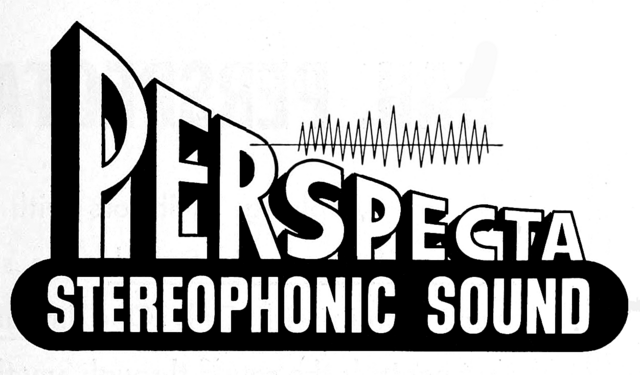 There have been four different permutations of the film’s English-language soundtrack to date: two authentic, two revisionist. The best available is the original mono mix which thankfully appears on all LaserDiscs, VHS and Betamax tapes, then some DVDs and just one of the three Blu-rays issued so far. But it is absent from most editions of the latter two formats, so if you crave the real thing check my notes carefully before buying. Pretty much on a par would be the unavailable Perspecta “Stereophonic” Sound heard at a limited number of suitably equipped, first-run cinemas. To Catch a Thief was shot in VistaVision, Paramount’s ‘flat’ competitor to anamorphic widescreen processes such as CinemaScope and Cinerama. Hitch’s next few films for Paramount, The Trouble with Harry, his 1956 remake of The Man Who Knew Too Much and Vertigo were also shot in the format, with the first three also featuring Perspecta soundtracks. He then persuaded MGM to licence the VistaVision process from Paramount for North by Northwest.
Perspecta was a sadly short-lived sound system employed on many VistaVision productions including, uncredited, all of those from Paramount until 1956. It was essentially a cheaper alternative to true magnetic stereo and was also suitable for theatres still only set up for mono playback. Using inaudible trigger tones embedded in the optical soundtrack, the mono audio’s volume would be variably panned across left-centre-right speakers for a more immersive experience. It was also used to great effect on many other films of the era, such as The Barefoot Contessa (1954), This Island Earth (1955); War and Peace, Forbidden Planet and Invasion of the Body Snatchers (all 1956). Japan’s Toho Studios were major advocates of Perspecta and it enhanced five of Akira Kurosawa’s early international successes from The Hidden Fortress (1958) to Red Beard (1965), the latter of which pretty much bookended use of the format. In recent years, Toho have restored many of their films in 4k, including Kurosawa’s, along with their Perspecta tracks and they’re now trickling out on international home video.
- Perspecta – Mike Trickett
- Facts about Perspecta Stereophonic Sound – Bob Furmanek
- Perspecta and Other Challenges to CinemaScope – Eric Dienstfrey, also Making Stereo Fit: The History of a Disquieting Film Technology (2024)
A total of seven technicians are known to have worked on To Catch a Thief’s soundtrack and their collective hundreds of credits span the early sound era right up to 2005, many of the most iconic American films and television programmes of those 75 years, and numerous awards. So it’s safe to say they really knew their stuff and, working alongside the famously fastidious Hitchcock, created a soundtrack that served the film magnificently for over half a century of viewing by millions of fans. But still it wasn’t deemed good enough…
Perspecta: A Lecture on Sound/French version
Rather than reviving To Catch a Thief’s original Perspecta soundtrack at relatively little cost, for its 2006 restoration the mono track was supplanted by a new 2.0 stereo mix, created from whatever dialogue, music and effects elements survive. But there’s no evidence they consist of anything other than the fully mixed mono track and the mono music stems covered previously; far from the best starting point. I’m actually ok with soundtrack revisionism, as I am with (shock, horror!) colorization, etc, but not at the expense of the original, best versions. Nonetheless, To Catch a Thief’s mono track has been increasingly sidelined in favour of the stereo remix and its surround successor. The stereo appears on the two most recent DVDs and the first two BDs, most of which omit the mono. Sadly, To Catch a Thief isn’t Hitch’s only such victim: among others, Murder!, Rich and Strange, Suspicion, Lifeboat, Rope, Vertigo, North by Northwest and Psycho have also been stereoized with new music and sound effects added.
Remember: this isn’t as simple as just magically “opening out” the original soundtrack, as it’s often disingenuously described by uninformed commentators. During remixing of a mono track such as this, where discrete audio stems no longer survive, many original music cues and sound effects have to be replaced with alternate or modern ones which often sound nothing at all like the originals. Then to compound the crime, additional cues are added that were never present in the first place – just because they can – or, often by mistake, original cues and dialogue are omitted altogether. Hitch worked with some of the best technicians in the business and every aspect of the classics they created were crafted that way for a reason. Who are the bean-counters and Johnny-come-lately knob-twiddlers with no original credits to their names, to second-guess Hitch and his collaborators, and mutilate their aural perfection?

Hitch, cinematographer Robert Burks on his fifth of 12 Hitchcocks, Grant, Kelly and crew on set
In 2020, Paramount went even further, inflicting a 5.1 surround mix on To Catch a Thief by building on and replacing the previous 2.0 stereo mix. But predictably, latest is not always best. Both mixes are… mmm, adequate if you’ve no point of comparison but naturally inferior and completely unnecessary, as the soundtrack is mostly dialogue-driven and doesn’t really benefit any from being altered to such a degree. Remember, modern dialogue-heavy films with surround audio are recorded and mixed with the format in mind, so can take full advantage of the added directionality and ambient effects it affords. But Thief wasn’t: the most Hitch and his sound engineers expected you to hear was mono audio emanating from behind the screen, perhaps with occasional panning left and right via the magic of Perspecta, and even then only in suitably-equipped theatres. Regardless, the surround remix is the only one allied to Paramount’s latest revised versions, which are now ubiquitous on home video, television and theatrical screenings.
The bottom line is all VistaVision films were natively mono, with some in directional Perspecta; even setting To Catch a Thief’s numerous transfer issues aside, adding a stereo soundtrack is creating a Frankensteinian anachronism that never existed until now, as happened with The Ten Commandments and Warner Bros’ North by Northwest. So again, the opposite of actual restoration. Although he embraced colour and widescreen, Hitch wasn’t interested in the possibilities offered by innovations like 3D and stereo sound. Dial M for Murder, his only foray into 3D, was shot that way at the insistence of Warner Bros. He said of the process, “It’s a nine-day wonder, and I came in on the ninth day.” As for stereo sound, beyond his brief (but again imposed) flirtation with Perspecta, every film the Master ever made remained resolutely in mono – and certainly not for lack of an adequate budget. Nonetheless, like Dial M’s 3D, Perspecta is the original audio for To Catch a Thief and should be its primary multichannel track, with mono as the de facto second choice.
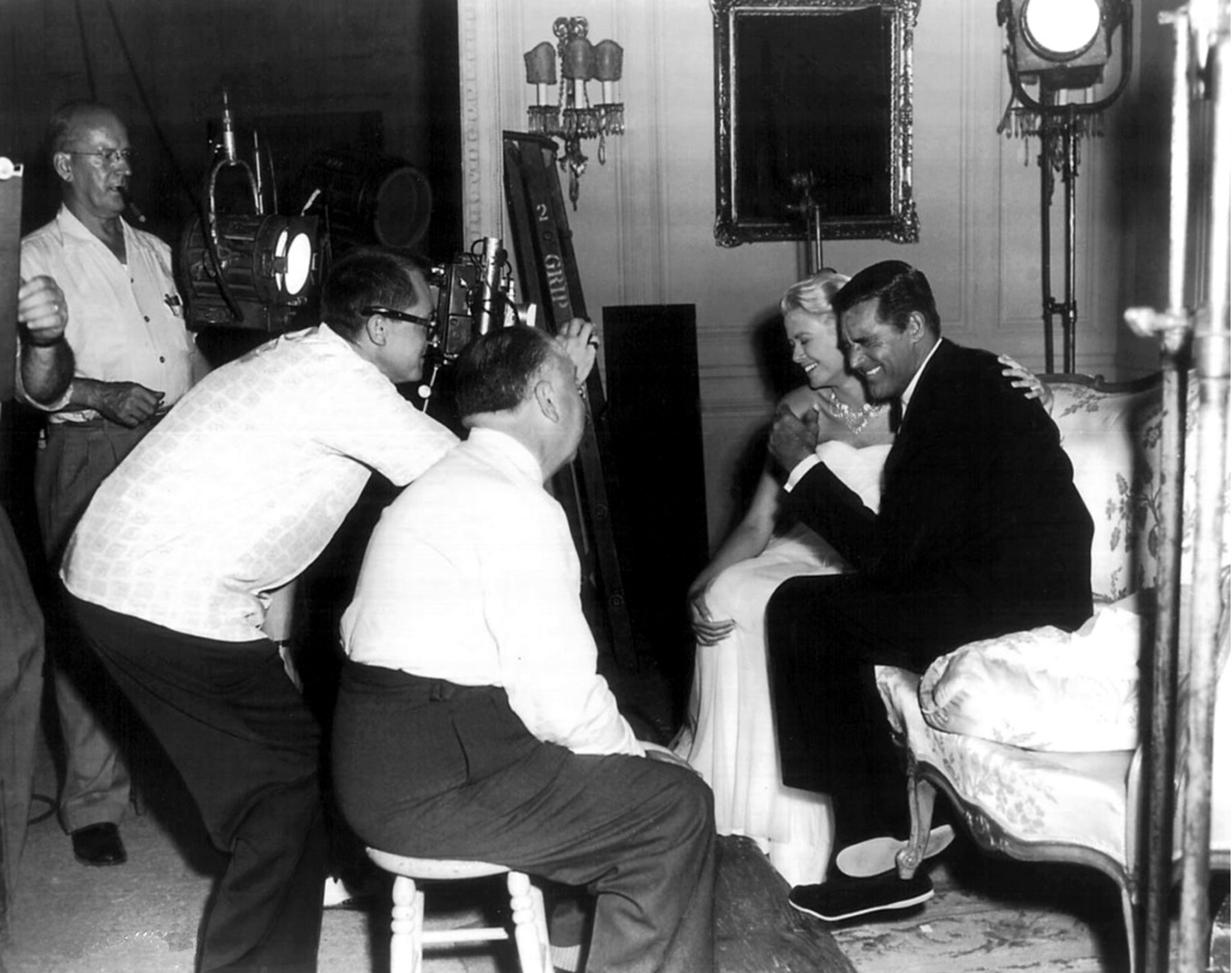
Burks, Hitch, Grant, Kelly and crew have a laugh on set – but would they still see the funny side if they knew how comprehensively their masterpiece would be mangled over the past few decades?
To Catch a Thief: Writing on a Classic | Making of a Masterpiece | Collectors Guide, Pt 2: Soundtrack and audio mixes, 3: Home video, 4: 2020s revisions
Related articles
This is part of a unique, in-depth series of 150-odd Hitchcock articles.