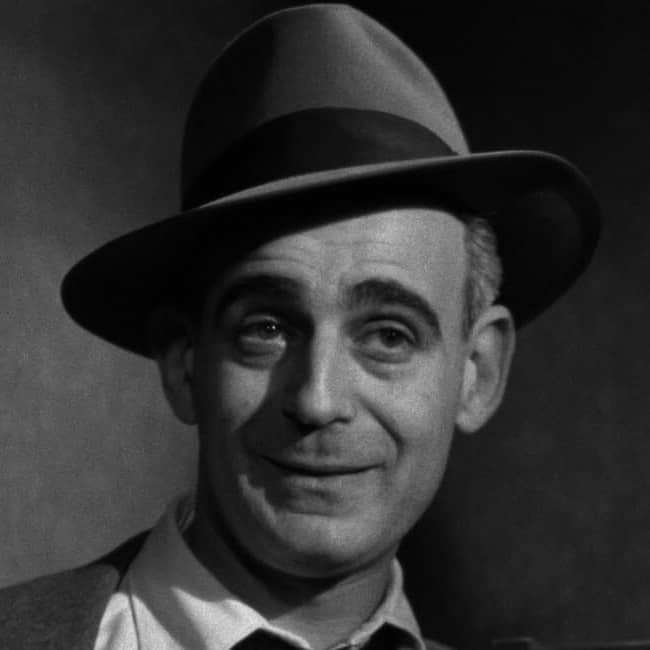
- Foremost film noir’s leading actors are far from household names but all deserve to be
- Their stellar screen careers stretched from mid-1930s all the way up to the mid-1990s
- Hundreds of collective credits include many of most iconic films and TV programmes ever
The Window: Film Noir Terror Through the Eyes of a Child | Film Noir File: Cast and Crew, Part 2 | Collectors Guide

US title lobby card
Contents
- Arthur Kennedy – Ed Woodry
- Barbara Hale – Mary Woodry
- Paul Stewart – Joe Kellerson
- Ruth Roman – Jean Kellerson
- Related articles
Arthur Kennedy – Ed Woodry
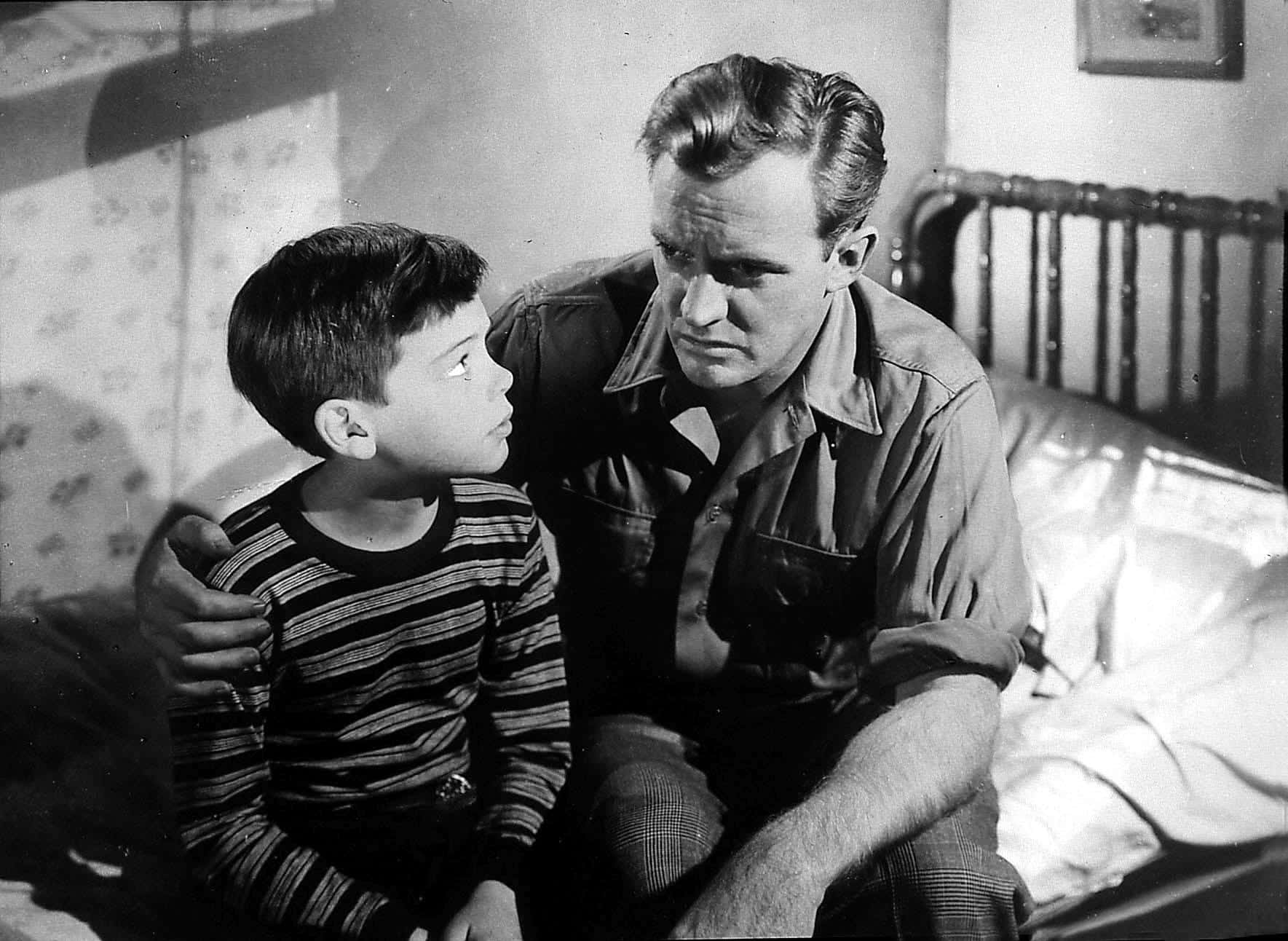
Bobby Driscoll and Kennedy
“Basically, all parts are character parts. The problem of the actor is to protect the differences in a character; to identify that the character being portrayed has his own personality traits. He has to find things within himself to establish these differences. I’m best when I portray not good guys, or bad guys, but human guys.” – Arthur Kennedy
Always a bridesmaid. Arthur Kennedy was one of the very best most serious and committed supporting actors of his era. But he was never a star. Born John Arthur Kennedy in Worcester, Massachusetts in February 1913, the young Kennedy was first involved in local theatre groups, before joining the Globe Theatre Company and toured the American Midwest performing abbreviated versions of Shakespeare’s plays. While on tour, Maurice Evans spotted his talent and invited him to join his company. After some notable work on Broadway, Kennedy transferred to Los Angeles where he carried on with his stage-acting career until Jimmy Cagney noticed him and cast him as his brother in City For Conquest (1940). Warner Brothers now gave him a contract and put him in a number of impressive supporting roles in films including High Sierra (1941), They Died With Their Boots On (1941) and Air Force (1943).
- Arthur Kennedy, Man of Characters: A Stage and Cinema Biography (2002) – Meredith C. Macksoud | review
- Arthur Kennedy, the biggest actor to ever come out of Worcester – Craig S. Semon
This promising start was abruptly cut short by war service, which he spent making and narrating specialist training films for pilots and air crew. After the war he alternated between Broadway roles in major productions including The Crucible and All My Sons, and a West Coast film career. In 1949 he won a Tony Award for his role in yet another Arthur Miller play, Death of a Salesman. In the cinema, Kennedy was nominated for a Best Supporting Actor Oscar for his role in Champion (1949) alongside his Window co-star Ruth Roman, and received his only Best Actor Oscar nomination for Bright Victory (1951) – a role that also won him the New York Film Critics Award. He would receive three more Best Supporting Oscar nominations for Trial (1955) (for which he won a Golden Globe), Peyton Place (1957) and Some Came Running (1958). He appeared in Lawrence of Arabia (1962) after being recommended by his old friend Anthony Quinn and received critical acclaim for his role but the parts he was now offered were less and less appealing. He found himself alternating between forgettable Hollywood movies and European movies:
“I got a phone call shortly after ‘Lawrence’ in which I accepted an Italian-Russian film. It (Italiani, brava gente) was a huge success in Europe and kept me busy in mostly Italian and Spanish films for years.”
In retrospect, he considered most of his European films as “stinkers”. Following the death of his wife in the mid 1970s – and his own health problems – Kennedy started to lose interest in his career: “I threw in the towel in 1978”, he told the Los Angeles Times – although he did make two more Hollywood movies and a clutch of foreign films after that date. Arthur Kennedy made over 70 movies in his career. He died of a brain tumour on January 5th 1990. Eulogising him, James Stewart (who had worked with Kennedy on Bend of the River and The Man from Laramie) told the New York Post:
“He was one of the best. He had a natural honesty, which showed in every one of his portrayals.”
Barbara Hale – Mary Woodry

Barbara Hale is best known to generations of American TV audiences as Perry Mason’s secretary and girl Friday in the long-running TV series, for which she won an Emmy Award in 1959. She was born on April 18th 1922 in Illinois. As a youngster she dreamed of being an artist rather than an actress and studied fine arts. To pay for her education, she started modelling (one ad campaign rewarded her with the less-than-inspiring nickname of the “Long Woolies Girl“). In turn modelling led to a move to Hollywood in 1943 and a screen test with RKO. They liked what they saw and things moved fast. The day after she arrived, she visited the studio and met its casting director, Dick Stockton…
“As I was shaking hands with him, the phone rang. He took the call, and as he listened, he started looking at me. ‘Yeah, yeah, yeah, just a minute.’ He turned to me and asked, ‘Honey, can you say a line?’ I said, ‘I don’t know.’ He said into the phone ‘There’s a kid in the office right now. I think she’ll work. I’ll send her right over.’ He told his assistant, ‘ Take her to wardrobe, take her to makeup, take her to Stage 6. One of the kids is sick. We’ve got to have a girl there immediately.’”
This was her very first walk-on part, in a movie called Gildersleeve’s Bad Day (1943). That same year she would appear with Frank Sinatra in Higher and Higher. While at RKO in 1943, she was also to meet Raymond Burr, who would become her dear friend and work colleague for fifty years. Burr recalled their first friendship…
“It happened when we were both working for RKO in 1943. I was there briefly before she came out from Illinois. She certainly made a lasting impression on me. When I left for service again, I took with me the image of a bright, lovely and wholesome personality whose charm kept lingering in my mind.”
Also while at RKO, Hale fell for the actor Bill Williams (who was unaware of her affections). She decided she wanted him and so conspired with Edward Killy, her director on West of the Pecos (1945), to help love on a little. She recalled Killy saying:
“‘Sure Barb, I’ll get Bill Williams up here in Lone Pine.’ He knew I had a crush on Bill. So Killy said, ‘ I’ll give him one scene at the beginning of the shoot and another at the end of the picture, so Bill can stay the whole time. That was so nice of him.’”
With time together, the couple fell in love and were married in 1946. They had a very long and happy marriage, (the actor William Katt is their son). After leaving RKO in 1948, Hale signed a term pact with Columbia, who put her straight into Jolson Sings Again (1949) – perhaps the highlight of her film career. Hale tried to juggle her and her husband’s careers with family life, but it got harder and harder. Williams was starring in the long-running TV Western series Kit Carson. They would shoot an episode a day and ever the dutiful wife Hale would bring her husband sandwiches and snacks on set. That wish to put her family first led Hale to progressively do less acting – and she almost turned down the role that was to make her famous.
“And finally… after a few years, I heard about this show that was going to be done. In fact, I was asked to read the script, which was the Perry Mason script, and I said, ‘I really don’t want to do a series right now. the children are just small, you know? And Gail Patrick Jackson [the producer] said, ‘But Barbara! Raymond Burr is going to do it and you know him,’ and I said, ‘I’ll do it!’”
As Della Street, Barbara Hale then starred in 270 episodes of Perry Mason made between 1947 and 1966. When the series returned as individual TV movies in 1985, she reprised her role in all 30 of them until they finally ceased production in 1995. Burr made it a stipulation that Hale had to return for the movies, or he wouldn’t make them either. He also especially cultivated an orchid which he named after her as a symbol of their friendship. Barbara Hale is now retired and celebrated her 90th birthday in April 2012. [She died in January 2017.]
- The RKO Gals (1974) – James Robert Parish
- Barbara Hale: Destined to Be Della (2021) – Brian McFadden
Paul Stewart – Joe Kellerson
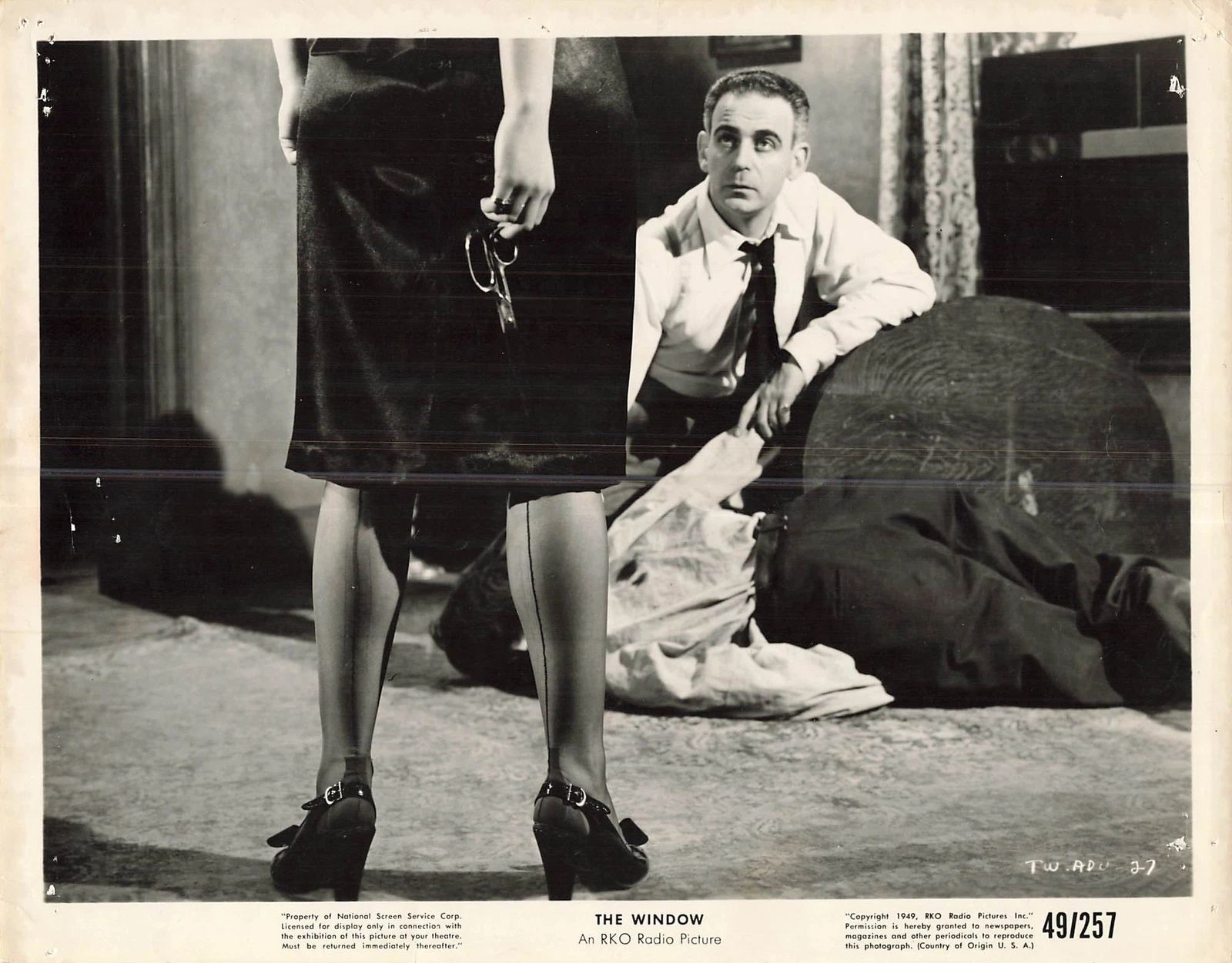
“People know my face but not my name.” – Paul Stewart
Paul Stewart – born Paul Sternberg in New York in March 1908 – was born to play bad guys. He looked like a villain and so they cast him as a villain again and again. Stewart dreamed of graduating from villain and leading heavy to a tough guy leading role like Bogart or Cagney. It wasn’t to happen:
“I thought I’d have a chance… But I came along on the cusp of that trend. It was going out of fashion and I got stuck as a heavy. I played subtle heavies, assistant heavies, stylish, rich heavies.”
Stewart developed a passion for acting in his teens. He made his 1931 Broadway debut in Two Seconds. After a number of Broadway roles he caught the eye of Orson Welles who invited him to join his Mercury Theatre of the Air. Consequently, Stewart made a lot of radio shows in the 1930s including the infamous 1938 War Of The Worlds broadcast that landed Orson Welles in so much trouble. In return, Welles cast him in Citizen Kane (1942) as the untrustworthy butler Raymond. In 1939 Stewart married big band singer Peg LaCentra and they remained happily married until his death.
From the late 1940s right up to the early 1980s, Stewart mixed his film roles with television parts. He started his TV career in an episode of The Ford Theatre Hour in 1949 and concluded it with an episode of Remington Steele in 1983. Between those appearances, his TV credits include Hawaii Five-0, Mission Impossible, The Rockford Files, Cannon, Climax!, Alfred Hitchcock Presents, Manix, Wagon Train, Dr. Kildare, The Doris Day Show and The Streets of San Francisco. He also directed a number of TV shows, most famously an episode of The Twilight Zone, and provided voices for a number of inauspicious cartoons. His other notable movie credits include Champion (1949), Twelve O’Clock High (1949), Kiss Me Deadly (1955), King Creole (1958), In Cold Blood (1967) and The Day Of The Locust (1975). Paul Stewart died of a heart attack in Los Angeles in February 1986. He was 77 years old.
Ruth Roman – Jean Kellerson
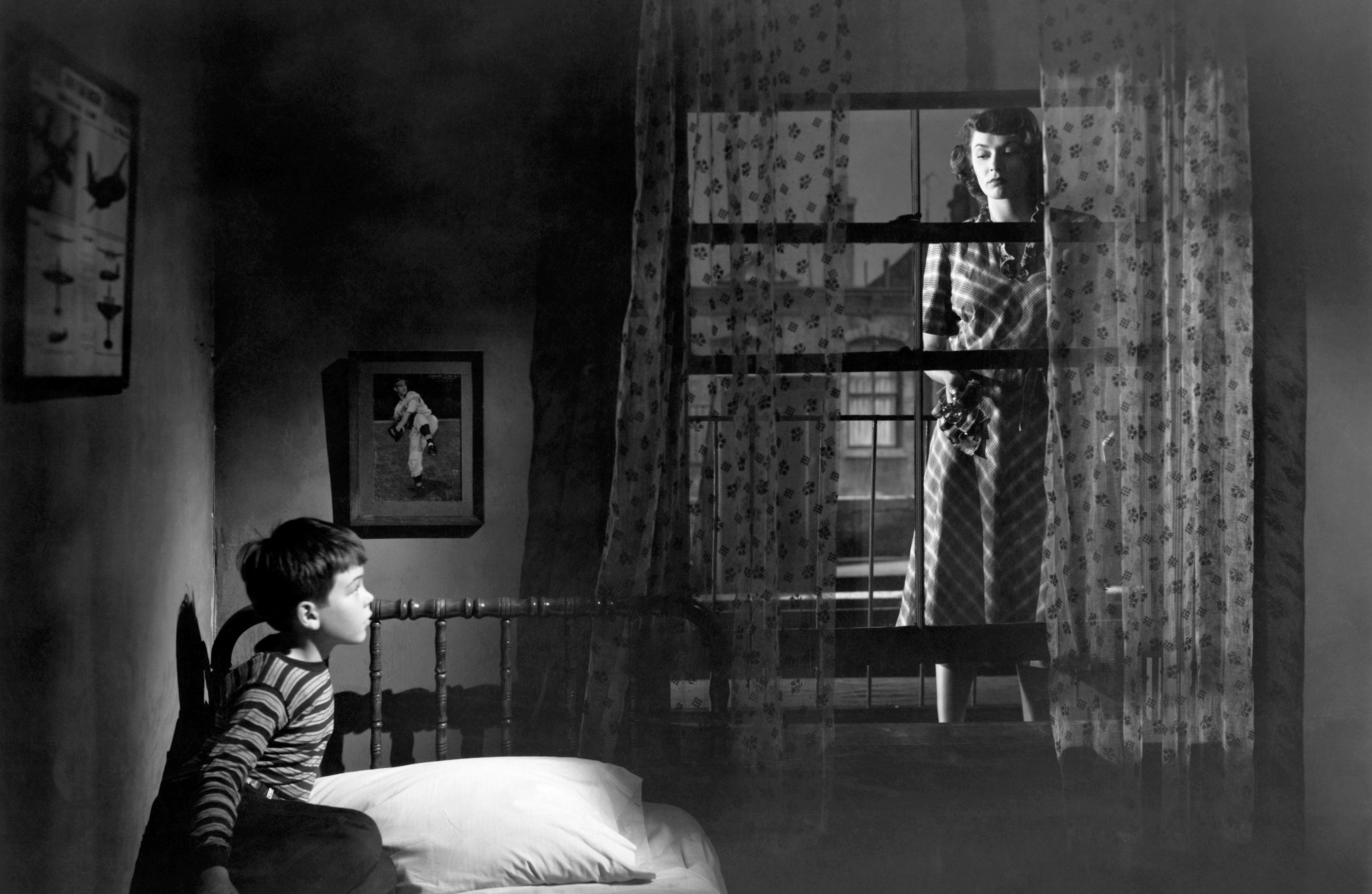
“I love everything about show business, even the junk. You can’t change this junk. People have tried. So you might as well accept it along with the good. Acting is my life. The profession can break my heart. In fact, it already has several times. But I love it.” – Ruth Roman
Ruth Roman knew about the tenement slums and the hard streets as portrayed in The Window. She grew up there. She was born Norma Roman into a poor family of Lithuanian immigrants on the 22nd December 1922 in Lynn, Massachusetts. Her father, a carnival barker, died when she was little and the family moved to a slum tenement district of Boston, where her mother held down jobs as a cleaner and waitress to keep the family fed. At one point, they were changing apartments every month because they could never afford to pay the rent. Roman left school young and went to New York in search of an acting career, but failed and returned home to Boston. By day, she worked as an usherette, acting by night with a local reparatory company. Finally, with what little money she had been able to save, she bought a one-way ticket to Hollywood. Here she shared lodgings with six other aspiring actresses. They somewhat optimistically named their humble lodgings ‘The House of the Seven Garbos’.
Roman’s first screen role came as a navy girl in Stage Door Canteen (1943) – but it was hardly the breakthrough she had been dreaming of. She failed a subsequent screen test with Warner Brothers and spent six years in the Hollywood wilderness playing bit parts that often went uncredited. She had small parts in Gilda (1946) and The Big Clock (1948). She also appeared in a – legend has it – really wonderful and potentially career-making piece of the Marx Brothers’ A Night in Casablanca (1946) – but her entire scene was cut from the movie. She also played the title role in the rather terrible Universal serial Jungle Queen (1945, DVD, clip). Thirteen episodes were made in all, each and every one of which remained a longstanding source of deep embarrassment to her. The Window was her big break. It led to her being invited to audition for Stanley Kramer’s boxing film Champion (1949). She thought she was being considered for the bad girl role and was stunned to be offered the role of the respectable wife. Her co-star, Kirk Douglas, saw the potential in Roman immediately, as she later remembered:
“He surprised me on the second day of shooting by saying, ‘Do you know that this picture is going to make you?” I couldn’t believe that but Kirk insisted and even offered to make a bet on it. If I had taken the bet I would have lost, for the role of Emma did more for my career than any other role.”
Douglas was right. The role saw her nominated for a Golden Globe as ‘Best Newcomer – Female’, while The Hollywood Reporter said, “Ruth Raman’s wife is hauntingly lovely’. Her beach scene in a bathing suit also attracted much attention and not a few fan letters that were somewhat less restrained than The Hollywood Reporter had been in summing up Roman’s appeal. Now Warner Brothers offered her a contract, and Look Magazine named her the ‘Big Time Movie Personality of 1950’. Her first major part under contract was in Bette Davis’ last movie, Beyond The Forest (1949). Studio Chief Jack Warner tried to have Roman cast as Stella in A Streetcar Named Desire (1951) – against the wishes of director Elia Kazan, who had already decided on Kim Hunter. Kazan dutifully screen-tested Roman, but Hunter still got the role. Warner had more success in browbeating Alfred Hitchcock, insisting that Roman be cast in Strangers on a Train (1951) against the director’s wishes. Her co-star, Farley Granger, later recalled:
“Hitchcock’s disinterest in Ruth Roman and the role she played led him to be outspokenly critical and harsh with her, as he had been with Edith Evanson on the set of Rope. He had to have one person in each film he could harass.”
.jpg)
The relative failure of Tomorrow Is Another Day (1951) and Lightning Strikes Twice (1951) made her increasingly unpopular with Warner and, after Blowing Wind (1953) she was let go by the studio. Freelancing now, she continued to work in films like the James Stewart Western The Far Country (1954). She also made an impression as a gangster’s girl in the British-made Joe Macbeth (1955). But Ruth Roman was soon to be caught up in a drama far bigger than anting she had ever experienced on the big screen… In July 1956, after a European vacation, she and her three-year-old son Dickie boarded a luxury ocean liner sailing from Cannes to New York. It was the SS Andrea Doria. On the night of July 25th, in thick fog, the Swedish passenger liner the MS Stockholm slammed straight into the Andrea Doria’s side, gouging a huge hole 40 feet deep. It ploughed through watertight compartments, fuel tanks and passenger cabins – killing many of their sleeping occupants on impact.
The Andrea Doria was regarded as one of the safest ships afloat and had a double-thick hull – but the Stockholm had a special ice-breaking bow that tore through the Andrea Doria like a knife through paper. Roman was dancing in the ship’s ballroom when the collision occurred. As the ship began to violently list to starboard, she flung off her high heeled shoes and raced through the stricken ship barefoot to her cabin, snatching up her son who was still fast asleep. As he awoke in her arms she told him, “We’re going on a picnic,” so as not to frighten him. Within thirty minutes , the captain made the decision to abandon ship. Although the Andrea Doria had enough lifeboats for all its passengers, it had started listing at such a steep angle that half the boats were useless and could not be launched. The Stockholm, which had come off better in the collision, launched its own lifeboats to help the passengers on board the Andrea Doria and the luxury liner, SS Ile de France, also headed to the spot to rescue survivors in response to the distress call:
“SOS DE ICEH SOS HERE AT 0320 GMT LAT. 40.30 N 69.53 WE NEED IMMEDIATE ASSISTANCE”
In thick fog and escalating chaos, Roman’s son was bundled into one of the boats off the Stockholm but before his mother could join him, it slipped away. Roman was left dangling precariously on a rope ladder over the side of the stricken liner and had to wait for rescue from the Ile de France which took her to New York. There was a media frenzy at New York’s piers as survivors of the sinking, including Ruth Roman, (who was surrounded by paparazzi), waited for the arrival of the damaged Stockholm to see if their loved ones had survived. Here she was finally reunited with her son. Incredibly, of the 1,134 passengers and 572 crew on board the Andrea Doria, the vast majority survived the disaster. It was determined that 46 passengers and crew had died when the two ships collided and a further two passengers had died as a result of the evacuation. Five crew members of the Stockholm were also killed by the impact.
By the 1960s, like so many actors of her generation, Roman was alternating film roles with television – but found more and more of her work on the small screen, playing parts in series including Mannix, The Outer Limits, the Bing Crosby Show and The Long Hot Summer. She continued working in television right up until the end of the 1980s, in shows as diverse as Kung Fu, Knots Landing, Murder She Wrote, Fantasy Island and Ironside. Ruth Roman died in her sleep on 9th September 1999 in Laguna, California at the age of 76. – UK Odeon DVD (2012)
- Ruth Roman: A Career Portrait (2022) – Derek Sculthorpe

The Window: Film Noir Terror Through the Eyes of a Child | Film Noir File: Cast and Crew, Part 2 | Collectors Guide
Related articles
- Alfred Hitchcock Collectors Guide: Rear Window
- François Truffaut Collectors Guide: The Bride Wore Black